

Best Service providing agency in town

We easily and quickly received the money from the consumers grow Sakira. After using our service, as well as communication.

testimonial-small-img1
Steve Behunin
Senior Consultant

The benefits of local SEO for small business

We easily and quickly received the money from the consumers grow Sakira. After using our service, as well as communication.

testimonial-small-img2
Michel Fix
Assistant Manager

Perfect from beginning to end faster

We easily and quickly received the money from the consumers grow Sakira. After using our service, as well as communication.

testimonial-small-img3
Pepe Charles
Executive Consultants

Our Team members

Harman Fro

CEO & Founder

Ronald Richard

Senior Consultant

Jacob Jones

Director of Marketing

Leslie Alexander

Leadership Team

Let’s talk business. But you first.

Describe your idea. The more details the better. Here’s what will happen next: we reply within 3 business hours; together we discuss your project on a quick call; you get a nicely presented quote from Sakira.

Services

    Press Release

    NAILU Demands Repeal of New Labour Codes: “Rollback of Justice for Workers”

    Date: July 29, 2021
    Location: Bhubaneswar
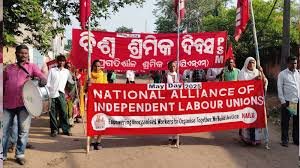
          The National Alliance of Independent Labour Unions (NAILU) has issued an urgent call to repeal the four new labor codes – the Code on Wages, Industrial Relations Code 2021, Occupational Safety, Health and Working Conditions Code, and the Code on Social Security – citing them as a serious rollback of workers’ rights and protections.

           “These new labor codes compromise the very foundation of workers’ rights,” said Dr. G. B. Nath, Labor Policy Analyst. “This is not just a policy shift – it’s a rollback of justice for the working class.”

    Gopinath Barik
    Labor Policy Consultant, emphasized: “We must reinstate laws that protect wages, working conditions, and job security for all
    workers.”
    A.R. Anupam
    Labor reform advocate and NAILU member, stated: “Labor unions and worker representatives must be involved in shaping any future reforms. Their voices must be heard to create a just system.”
    Dr. R. S. Tiwari
    Coordinator of Media and Communications, added: “The current codes overlook informal workers. We must prioritize measures that safeguard their rights and ensure equitable access to benefits.”
    Mr. Vikash
    Labour Rights Advocate, further noted: “Informal workers are the backbone of our economy. We must protect their rights and ensure fair wages.”
    Dr. Dibendu Kumar
    Labour Policy Researcher, observed: “Reforms must address the realities of unorganized workers. Without targeted provisions, millions will remain excluded from social protection.”
    Sushama Sahu
    Women Workers’ Rights Activist, highlighted: “Women in informal work face double marginalization — as workers and as women. Any reform must ensure gender-sensitive protections and support.”

    Call to Action

          This collective statement from NAILU and allied voices underscores the need for inclusive, participatory labor reform rather than imposed policy shifts that risk deepening inequality.
          NAILU calls upon the Government of India to reconsider the far-reaching implications of the new labor codes and engage meaningfully with worker representatives to uphold labor justice and social protection.

    Issued by:
    National Alliance of Independent Labour Unions (NAILU)
    Contact: 9437961278      Email: nailuunions@gmail.com

    NAILU Condemns Central Government’s Failure to Keep Data on Migrant Workers Affected During COVID-19 Lockdown

    February 2021
    For Immediate Release
            The National Alliance of Independent Labour Unions (NAILU) has expressed deep disappointment and outrage over the central government’s failure to maintain accurate data on migrant workers who lost their jobs and lives during the COVID-19 lockdown. In a shocking revelation, Minister of Labour and Employment Santosh Kumar Gangwar informed the Lok Sabha that the Ministry had no data on the number of migrant workers impacted by the lockdown, despite widespread job losses and fatalities.

            Dr Golak Behari Nath, Policy and Research Director, echoed these concerns, stating, “Data is the foundation of policy. Without it, the government cannot claim to address the needs of migrant workers. This is not just an administrative failure, but a human one.”

    National Convener Mr. A.R. Anupam
    Strongly criticized the government's negligence, stating, "This is an unacceptable oversight that shows a complete lack of concern for the most vulnerable section of our workforce. Migrant workers, who are the backbone of India's economy, deserve better."

    Dr. R.S. Tiwari, National
    Campaign Coordinator
    Added, "The absence of such critical data not only denies justice to the workers who suffered during the pandemic but also makes it impossible to develop effective policies for their rehabilitation. This failure reflects the government's indifference towards those who were worst hit by the lockdown."
    Mr. Bikash , Media and
    Communications Coordinator
    Highlighted that accurate data collection is fundamental to accountability and policy-making. "By failing to record the struggles of migrant workers, the government has not only ignored their plight but has also made it harder to address the long-term economic impact of the pandemic on them and their families."
    Mr. Gopinath Barik, Labour Rights Advocate
    Emphasized the legal implications of this failure, noting, "The government's inability to maintain data on job losses and deaths of migrant workers is a violation of their basic rights. Without proper documentation, there can be no legal recourse or compensation for the families who have lost their loved ones or their livelihoods."

    NAILU demands immediate corrective measures from the government, including:

    1
    Urgent efforts to collect and publish comprehensive data on migrant workers affected by the COVID-19 lockdown.
    2
    Implementation of a national registry for migrant workers to track their employment status, health, and social security needs.
    3
    Adequate compensation and support to families of workers who lost their lives or jobs during the pandemic.

    NAILU reiterates its commitment to fighting for the rights of migrant workers and will
    continue to advocate for justice, transparency, and accountability in addressing the needs of
    India’s labor force.

    NAILU Submits Memorandum to Union Labour Minister Urging Immediate Reforms for Domestic Workers

    New Delhi | April 12, 2023
             The National Alliance of Independent Labour Unions (NAILU) has submitted a comprehensive memorandum to the Honorable Minister of Labour, Government of India, drawing attention to the urgent and long-standing issues faced by domestic workers across the country.

            In the memorandum, NAILU highlighted the critical role played by domestic workers-many of whom are women-in supporting households through childcare, eldercare, cleaning, cooking, and other essential services. Despite their indispensable contributions, domestic workers remain largely invisible in the eyes of the law, with minimal protection or recognition.

    Key Concerns Raised

    NAILU’s memorandum identified several major challenges plaguing domestic workers:

    Lack of social security

    Including health insurance, pensions, and maternity benefits.
    Exploitative working conditions
    Such as long hours, poor wages, and unsafe environments.
    Exclusion from labour laws

    Rendering them vulnerable to abuse and exploitation.
    Gender-based violence

    And harassment at the workplace.
    Difficulties in unionization

    Due to the informal and individualized nature of their employment.

    Concrete Recommendations

    To address these concerns, NAILU has proposed a set of actionable policy recommendations:

    Enactment of a dedicated legislation
    That formally recognizes domestic workers and brings them under the ambit of labour laws.
    Creation of a national registry
    For domestic workers to formalize employment and ensure benefits reach them.
    Extension of social security schemes
    Like ESI and PF to domestic workers.
    Implementation of a minimum wage policy
    That is fair and region-specific.
    Skill development and certification programs
    To improve employability and recognition.
    Enforcement of safe working conditions
    And penalties for violations.
    Accessible grievance redressal systems
    Including district-level labour officers.
    Awareness campaigns
    To sensitize employers and society on domestic workers’ rights.

    Call for Immediate Action

            NAILU’s National Convener, AR Anupam, and Policy Coordinator, Prof. Golak Behari Nath, jointly emphasized that these reforms are essential to ensure justice, equity, and dignity for millions of domestic workers. They reiterated NAILU’s readiness to collaborate with the government in shaping and implementing policies that can uplift this vulnerable section of the workforce.

           “With the right policies in place, domestic workers can be empowered to live and work with dignity. It’s time the nation recognizes their contribution and grants them the legal protection they deserve,” said Prof. Nath.

           NAILU has urged the Ministry to treat this issue with priority and initiate dialogue on policy reform. The alliance reiterated its commitment to continue advocating for the rights of unorganized and informal sector workers across India.

    Supreme Court Slams Governments for Failing Construction Workers: Rs. 28,000 Crores Unutilized

    SC Demands Accountability for Cess Collected but Not Spent on Workers’ Welfare
              New Delhi | 18.02.2019 – The Supreme Court of India has issued a scathing judgment, holding both state and central governments accountable for the gross mismanagement of welfare funds meant for construction workers. Despite collecting over ₹37,400 crores under the Building and Other Construction Workers (Regulation of Employment and Conditions of Service) Act, 1996 (BOCW Act) and the Building and Other Construction Workers’ Welfare Cess Act, 1996 (Cess Act), only ₹9,500 crores have been utilized, leaving ₹28,000 crores unspent. The judgment calls for immediate remedial action to ensure the welfare of millions of unorganized construction workers in India.

    Key Findings of the Judgment:

    Non-Implementation of Laws:
    The SC found that State Governments and Union Territories have failed to register workers, form welfare boards, and provide promised benefits.
    Workers Deprived of Social Security
    Funds meant for accident benefits, pensions, education for workers’ children, and maternity benefits have either been underutilized or diverted.
    Failure of Monitoring Mechanisms:
    State Advisory Boards have not met even once in the past year, highlighting the lack of commitment to worker welfare.
    Unspent Cess Funds:
    Over ₹28,000 crores meant for workers' welfare remains unutilized, resulting in severe injustice to millions of labourers.
    Government Apathy and Legal Inaction:
    The Supreme Court noted that despite repeated orders, authorities have deliberately ignored compliance, forcing the court to issue contempt warnings.

    SC’s Directives:

    The Supreme Court has laid out the following key measures to ensure proper implementation
    of the BOCW Act and Cess Act:

    Comprehensive
    Audit

    State Welfare Boards must be audited by the Comptroller and Auditor General of India (CAG) to track fund utilization.
    Accountability in Cess Collection & Disbursement
    The court has directed that funds collected under the Cess Act must directly benefit workers and not be misused.
    Mandatory
    Reporting

    Labour Ministries and Welfare Boards must file progress reports regularly to ensure transparency.
    Strict
    Monitoring

    A national-level monitoring committee will be established to track implementation and fund utilization.

    Reactions from Labour Rights Advocates & Experts:

    Dr. G. B. Nath, Labour Policy Analyst,
            “This judgment is a landmark in ensuring workers’ rights. The fact that ₹28,000 crores remain unspent shows the systemic neglect of construction workers. The government must act now to ensure every rupee reaches the workers it was meant for.”

    Rakshyakar Anupam, National Convener, National Alliance of Independent Labour
    Unions (NAILU)
           “The Supreme Court has exposed the grim reality that our governments have failed construction workers. The collected funds must be immediately redirected towards pensions, accident relief, and housing support. We demand a transparent and time-bound action plan.”

    Gopinath Barik, Policy Consultant on Labour
           “The SC’s intervention is critical. The labour welfare cess is meant for workers, not to be hoarded by the government. We call for a workers’ audit committee to oversee fund utilization.”

    Dr. R. S. Tiwari, National Alliance of Independent Labour Unions (NAILU)
          “The judgment reinforces what we have been advocating for years—cess funds should not be misused. The SC must monitor implementation through periodic compliance reports to ensure justice for construction workers.”

    Mr. Vikash, Labour Rights Advocate
           “This is a historic moment for labour rights in India. We demand mandatory social security for all construction workers, along with universal ID cards to ensure they receive benefits, regardless of migration.”

            The Supreme Court’s judgment exposes the systemic negligence in utilizing ₹28,000 crores meant for construction workers’ welfare. Governments must be held accountable for this injustice. Immediate action is needed to ensure these funds serve the workers who build our nation!” – SR Ravi, National Campaign Coordinator #WorkerRights #CessUtilization #SupremeCourtCall for Immediate Action

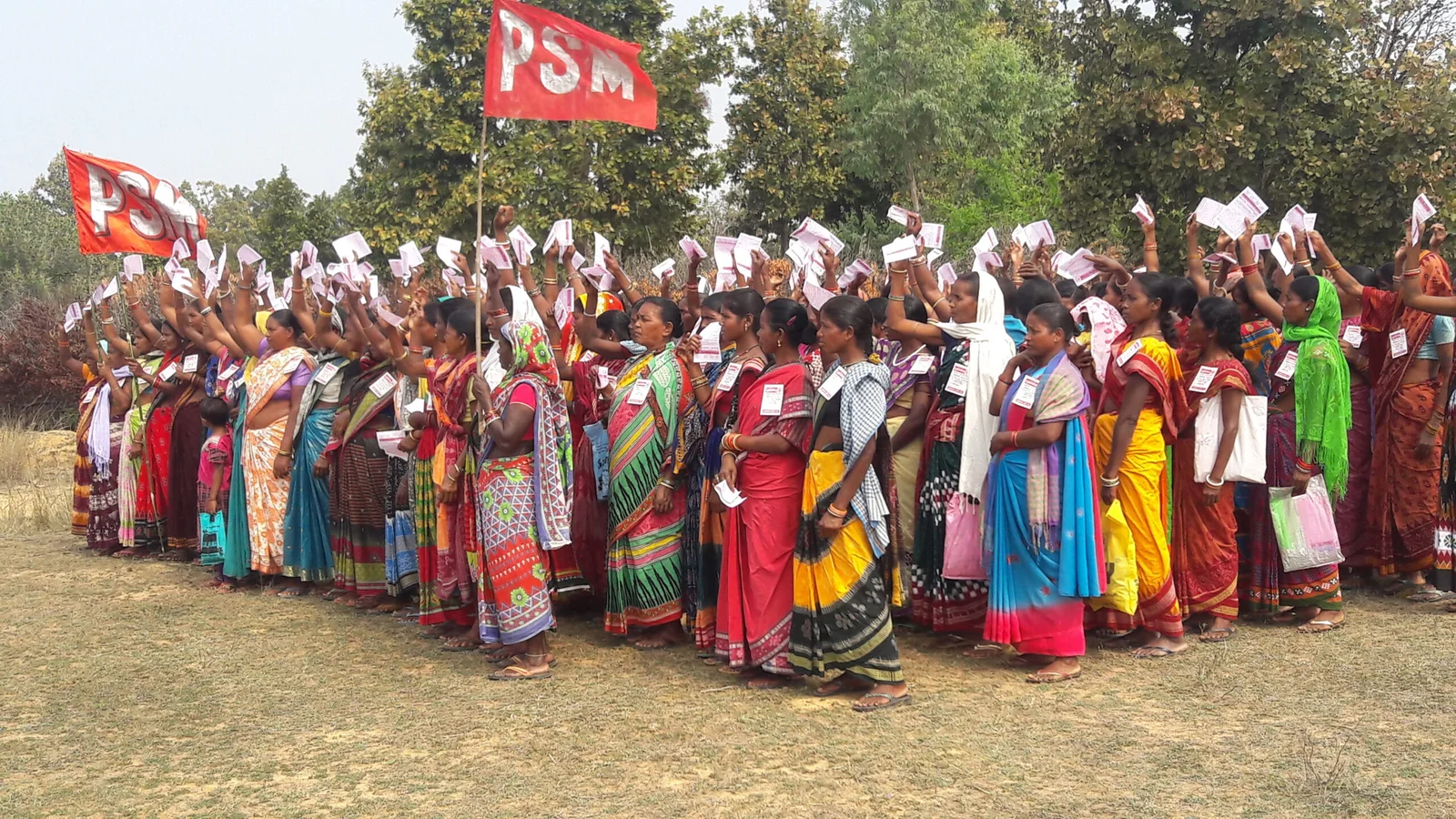
           Labour rights organizations, including Progressive Sramik Manch (PSM) and NAILU, have called upon the central and state governments to immediately:

    Identify and register all eligible construction workers
    To ensure direct benefit transfers.
    Ensure proper utilization of funds
    Through transparent mechanisms.
    Hold negligent officials accountable
    For failing to implement the SC’s directives.
    Launch awareness campaigns
    To inform workers about their rights and entitlements.

           This judgment has sent a clear message-construction workers cannot be ignored any longer. The challenge now lies in ensuring that this landmark ruling is enforced in both letter and spirit.